AmStaff vs American Pit Bull Terrier: one ancestry, two registries
The American Staffordshire Terrier and the American Pit Bull Terrier started as the same dogs. What separates them today is mostly paperwork and about ninety years of breeding for different goals. The difference is easy to dismiss as a detail for show people, but it can decide whether a dog is legal in a given city or country, and whether an insurer will cover its owner.
One family tree
Both breeds descend from the British bull-and-terrier, a 19th-century cross of the Old English Bulldog and local terriers, bred for dog fighting and rat baiting. When Britain banned bull and bear baiting in 1835, fights between dogs became the main outlet for these blood sports. The dogs reached North America in the second half of the 1800s.
American breeders who were refused by the American Kennel Club (AKC) because of the fighting association set up their own registry. The United Kennel Club (UKC) recognized the breed as the American Pit Bull Terrier on 10 February 1898.
The AKC changed course in the 1930s. In 1936 it accepted the same type of dog under a new name, Staffordshire Terrier, and around 50 UKC dogs entered the AKC stud book. The breed standard dates from 10 June 1936. The name later became American Staffordshire Terrier, to avoid confusion with the Staffordshire Bull Terrier from England (see our article on the AmStaff and the Staffordshire Bull Terrier).
AKC vs UKC: who registers what
For several decades the AKC reopened its stud book to UKC-registered American Pit Bull Terriers from time to time. That stopped in the 1970s. Since then, a puppy can be registered as an American Staffordshire Terrier only if both parents are AKC-registered.
The two clubs now treat the question differently:
- AKC: recognizes the American Staffordshire Terrier, does not recognize the American Pit Bull Terrier.
- UKC: recognizes the American Pit Bull Terrier and does not recognize the AmStaff as a separate breed. An AKC AmStaff can be registered with the UKC as an American Pit Bull Terrier.
- ADBA (American Dog Breeders Association): registers the American Pit Bull Terrier and, since 2015, treats the AmStaff as a separate breed.
- FCI (Fédération Cynologique Internationale): recognizes the American Staffordshire Terrier, not the American Pit Bull Terrier.
Because of the UKC rule, some dogs are “dual registered”: AmStaffs with AKC papers and APBT papers from the UKC at the same time. Same dog, two breed names.
Show lines and working lines
After the stud book closed, AmStaff breeding was driven by the AKC standard and the show ring. Selection focused on conformation, so the breed moved toward a stockier, more uniform dog. The standard asks for “great strength for his size” and a dog that is “stocky, not long-legged or racy in outline.”
The American Pit Bull Terrier kept more variety. Some of its bloodlines trace back to the fighting pits of the 20th century; others were developed for UKC conformation shows from the 1980s. ADBA conformation dogs tend to be lighter and leaner than both UKC show dogs and AKC AmStaffs, and the breed does well in weight pulling, agility and other dog sports.
Neither label tells you much about an individual dog’s temperament. The ADBA standard treats aggression toward people as a disqualifying fault, and the AmStaff breed club (the Staffordshire Terrier Club of America) says aggression toward humans in non-threatening situations should never be seen. The same club warns that dog aggression can appear even in well-socialized dogs. Our temperament guide covers what that means day to day.
Size and appearance
| American Staffordshire Terrier (AKC) | American Pit Bull Terrier (commonly cited ranges) | |
|---|---|---|
| Height, males | 18 to 19 in (preferred) | about 18 to 21 in |
| Height, females | 17 to 18 in (preferred) | about 17 to 20 in |
| Weight, males | 55 to 70 lb | about 35 to 60 lb |
| Weight, females | 40 to 55 lb | about 30 to 50 lb |
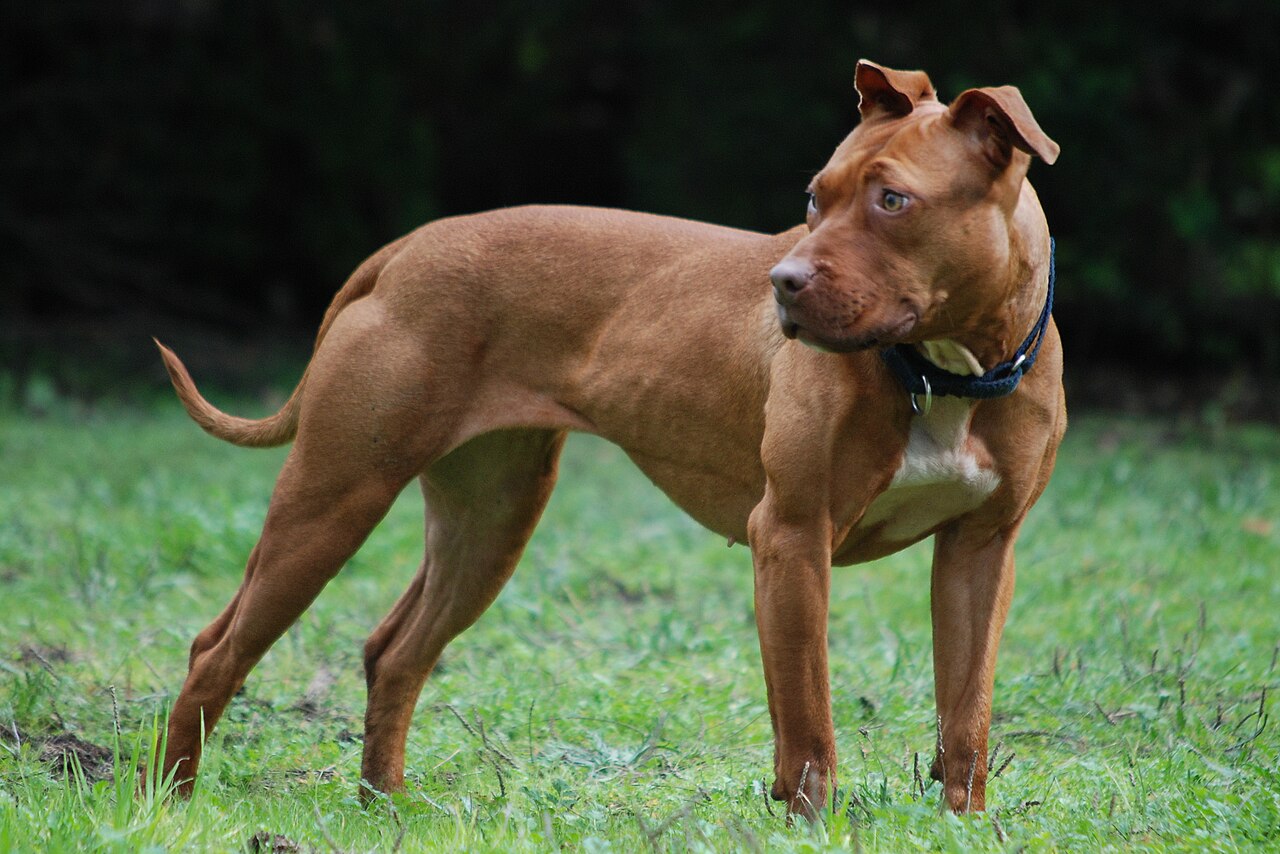
| Nose | always black | varies, red noses occur (Old Family Red Nose strain) |
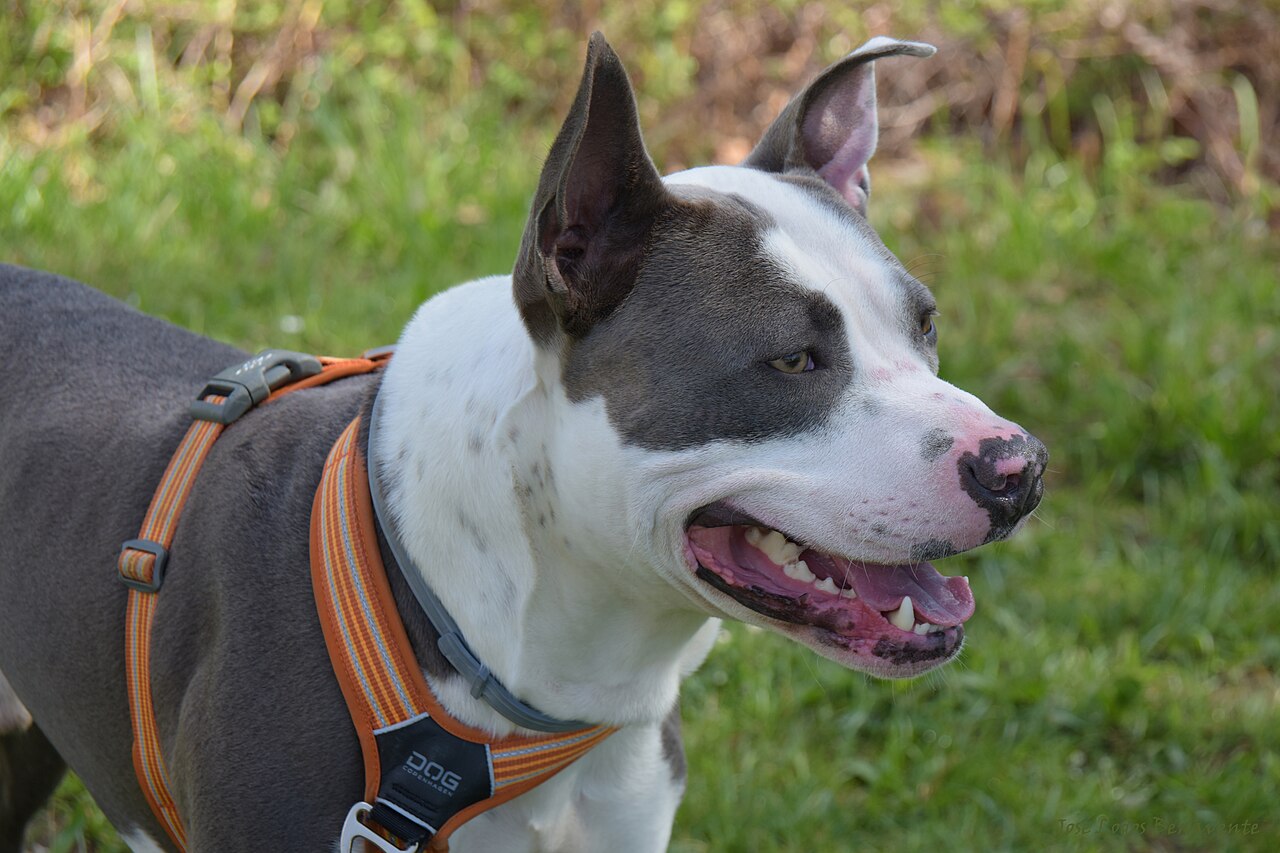
| Build | stocky, broad head, pronounced cheek muscles | more variable, often longer-legged and lighter |
The AmStaff heights come from the AKC standard and the weights from the AKC breed page. The APBT figures are the ranges commonly quoted in breed references such as Wikipedia’s breed article.
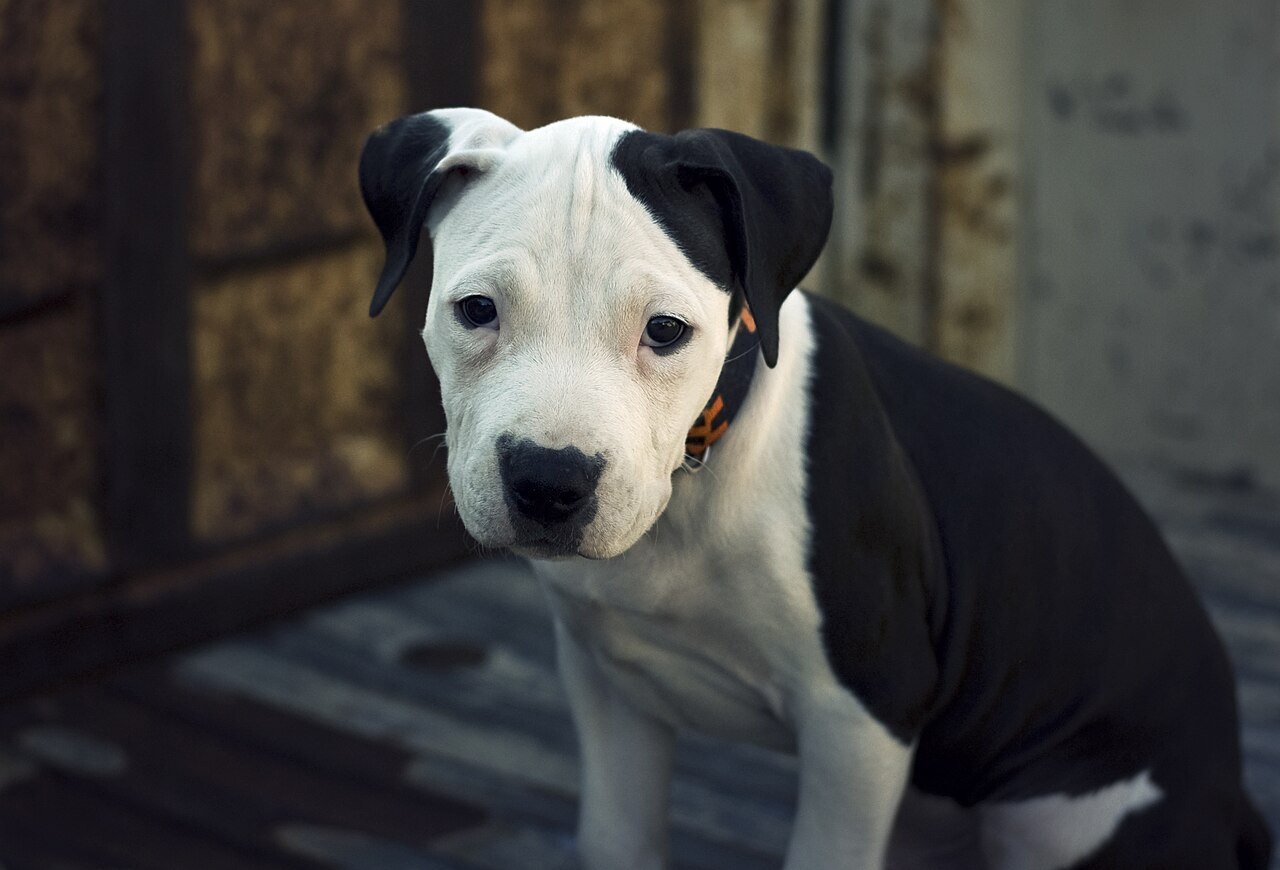
In practice, a well-bred AmStaff and a UKC show APBT can look almost identical, since the two clubs share many judges. The clearest visual gap is between AKC AmStaffs and the leaner ADBA-registered dogs.
“Pit bull” is not a breed
In everyday American usage, “pit bull” is an umbrella term. It usually covers the American Pit Bull Terrier, the American Staffordshire Terrier, the Staffordshire Bull Terrier and the American Bully, plus any mixed-breed dog that looks like them. In the UK the term is narrower and refers to the American Pit Bull Terrier type.
Visual labels are unreliable. Studies have found that when people working in rescue, adoption or animal control label a mixed-breed dog, the label does not always match its DNA. A stocky, short-coated dog with a square head tends to be called a pit bull whatever its ancestry.
Why the distinction matters
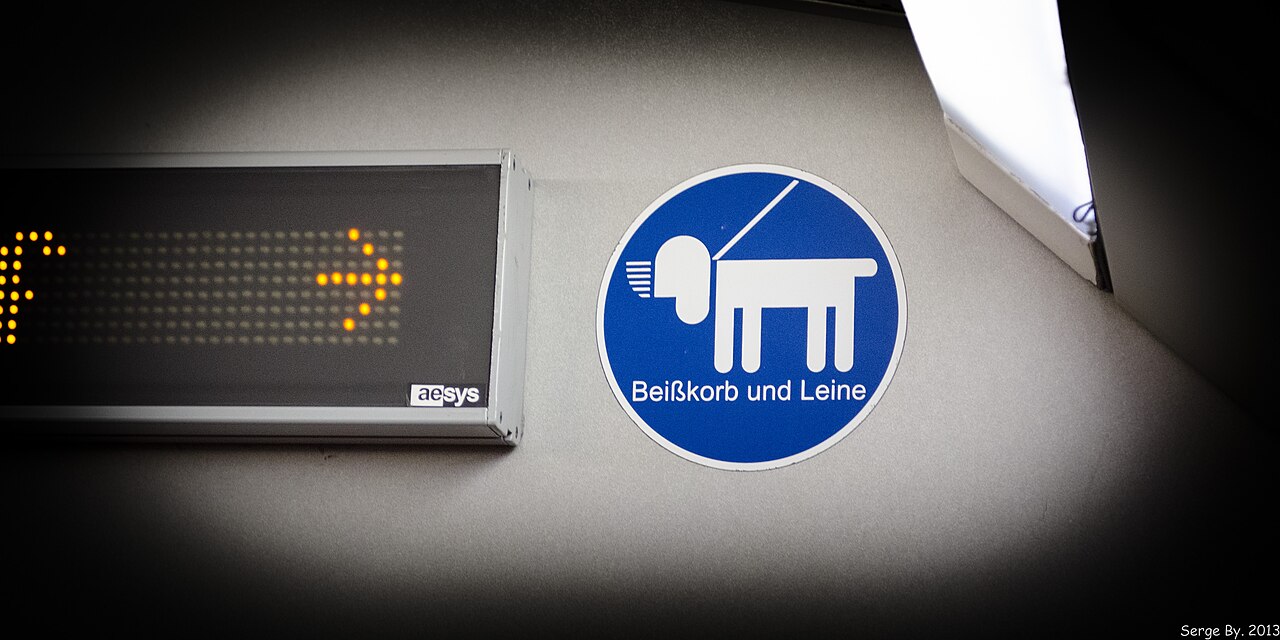
Breed-specific laws
Many laws name the AmStaff directly or define a “pit bull” broadly enough to include it:
- Ontario’s Dog Owners’ Liability Act defines “pit bull” to include the American Staffordshire Terrier, the American Pit Bull Terrier, the Staffordshire Bull Terrier and look-alikes, and bans new ones.
- Denver’s code defines a pit bull as an American Pit Bull Terrier, American Staffordshire Terrier, Staffordshire Bull Terrier or a dog that substantially matches their AKC or UKC standards, and requires a breed-restricted permit.
- France treats the two very differently: a pedigreed AmStaff registered in the French stud book (LOF) is a regulated “category 2” dog, while an unregistered dog that looks like an AmStaff is a “category 1” dog, which can no longer be bought, sold or given away.
- In the UK, a dog is judged by type, not by papers. An AmStaff is not a listed breed, but a dog that matches enough of the characteristics of the Pit Bull Terrier type can be treated as a banned dog.
Our article on where the AmStaff is restricted goes through these laws in more detail.
Proof of breed
Where the law separates a registered AmStaff from a “pit bull type”, registration papers are the main evidence. French rules require LOF registration (or a foreign stud book recognized by the Société Centrale Canine). Danish authorities recommend that owners of dogs resembling prohibited breeds keep documentation of the dog’s descent, such as a pedigree.
Insurance and housing
In the United States, some home and renter insurers refuse to cover dogs they classify as pit bulls, charge more, or add conditions such as passing the AKC Canine Good Citizen test. Many rental properties ban pit bull type dogs when the building’s insurance will not cover them. An insurer’s or landlord’s definition of “pit bull” may include the AmStaff, so ask for the exact wording before you sign.
If you are choosing between the two, look past the name: check the parents, their health testing and the rules where you live and where you might move. Keep the registration certificate and pedigree with the dog’s other records, since in France and Denmark, for example, they are the proof that decides which rules apply.
Photo: geoggirl, Wikimedia Commons, CC BY 2.0.