Where the AmStaff is restricted: breed-specific laws by country
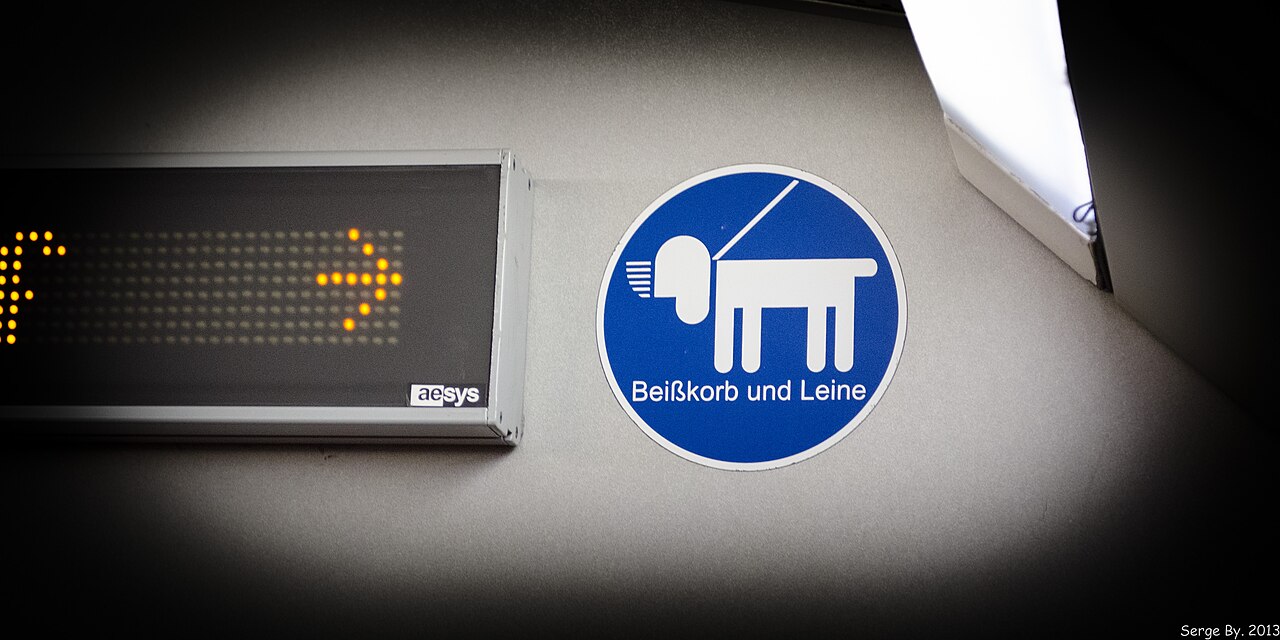
The American Staffordshire Terrier is named in dog laws in several countries, and in many others it is caught by broad definitions of “pit bull” or “fighting dog.” The rules range from a muzzle in public to a full ban on keeping, breeding or importing the breed. This page summarizes the rules that could be checked against official sources in September 2026.
Laws change, and local rules can be stricter than national ones. Before you buy, adopt, travel or move with an AmStaff, check with the local authority (town hall, council, police or animal control) for the place concerned. This article is general information, not legal advice.
France: category 2, with a permit
France’s rules on “dangerous dogs” come from the law of 6 January 1999 on dangerous and stray animals (loi n° 99-5), now in the Code rural et de la pêche maritime. The official guide on service-public.fr sets out two categories:
- Category 2, guard and defense dogs: pedigreed American Staffordshire Terriers, Rottweilers and Tosas. “Pedigreed” means registered in the French stud book (LOF) kept by the Société Centrale Canine, or in a foreign stud book it recognizes.
- Category 1, attack dogs: dogs without a pedigree that look like an American Staffordshire Terrier (commonly called pit bulls), a Mastiff (boerbulls) or a Tosa.
So the same-looking dog can be legal with conditions or close to banned, depending on its papers. Buying, selling, giving away or importing a category 1 dog is an offense punishable by 6 months in prison and a €15,000 fine, and category 1 dogs must be sterilized.
A registered AmStaff (category 2) can be kept by an adult who meets these conditions:
- a permis de détention (keeping permit) from the mayor of your town, free of charge; a provisional permit covers dogs under 8 months, and the final one must be obtained before the dog turns 1;
- a one-day training course leading to a certificate of aptitude, paid by the owner;
- a behavioral assessment by an approved vet between 8 months and 1 year of age;
- microchip identification, rabies vaccination (even in rabies-free areas) and civil liability insurance.
Minors, adults under guardianship and people with certain criminal convictions may not keep a category 1 or 2 dog. In public, a category 2 dog must be on a leash and muzzled on public roads, in the common areas of apartment buildings, in public places, in premises open to the public and on public transport. Category 1 dogs are banned from public transport and public places other than the street.
United Kingdom: judged by type, not breed
The American Staffordshire Terrier is not on the UK’s banned list. Under the Dangerous Dogs Act 1991, the banned types in the UK are the Pit Bull Terrier, Japanese Tosa, Dogo Argentino, Fila Brasileiro and the XL Bully, which was added by orders made in 2023 for England and Wales and in 2024 for Scotland and Northern Ireland.
The catch is how a dog is assessed. The gov.uk guidance states that whether a dog is banned “depends on what it looks like, rather than its breed or name.” A dog that matches many characteristics of the Pit Bull Terrier type may be a banned type, whatever its pedigree says. Defra’s guidance for enforcers uses a 1977 American Dog Breeders Association conformation standard to describe that type, and a police or council dog expert makes the assessment.
If a dog is found to be a banned type:
- the police or council can seize it, even if it has not behaved dangerously;
- it is up to the owner to prove the dog is not a banned type;
- a conviction can mean an unlimited fine, up to 6 months in prison, or both, and the dog will be destroyed;
- if the court decides the dog is not a danger to the public, it can instead let the owner apply for a Certificate of Exemption, under which the dog must be neutered, microchipped, kept on a lead and muzzled in public, and kept securely.
gov.uk also states that from 1 November 2026, a child under 12 must not be left in close contact with a banned dog in a private place without adult supervision.
XL Bully rules
In England and Wales, it has been an offense since 1 February 2024 to own an XL Bully without a Certificate of Exemption, and applications have closed. Scotland and Northern Ireland have their own XL Bully rules. The XL Bully is a separate type, but owners of large, heavily built AmStaffs should know the definition exists.
Germany: import ban plus state rules
Germany’s federal law restricting the import of dangerous dogs (Hundeverbringungs- und -einfuhrbeschränkungsgesetz, 2001) lists the Pitbull-Terrier, American Staffordshire Terrier, Staffordshire Bull Terrier and Bull Terrier, and their crosses. Under section 2, these dogs may not be brought into Germany from another EU country or imported from outside the EU.
Keeping a dog is then regulated by each German state (Land), and the lists and conditions differ from one state to the next. Check the rules of the specific state before traveling or moving there with an AmStaff.
Ireland: muzzle and short lead
The Control of Dogs Regulations 1998 apply to a list of breeds that includes the American Pit Bull Terrier, the English Bull Terrier and the Staffordshire Bull Terrier, “and to every other strain or cross” of the listed breeds. The American Staffordshire Terrier is not named. In a public place, a listed dog must be securely muzzled and led on a strong chain or leash no longer than 2 meters by a person over 16 who can control it. Whether a given AmStaff is treated as a strain or cross of a listed breed is a question for your local authority.
Denmark: banned since 2010
Denmark prohibits the keeping and breeding of 13 breeds and their crosses, including the American Staffordshire Terrier, according to the Danish Veterinary and Food Administration. The ban took effect in 2010 and was kept after a 2013 evaluation.
- The ban also applies to tourists: a prohibited dog cannot be brought to Denmark for a holiday.
- Dogs acquired before 17 March 2010 could be kept under transitional rules, on a lead of at most 2 meters and with a closed muzzle in areas open to the public.
- Transit through Denmark is allowed if the dog stays in the vehicle, apart from short stops to relieve itself.
- If the police doubt a dog’s breed, the owner must prove it is not a prohibited breed, for example with a pedigree.
Canada: Ontario’s ban is still in force
Canada has no federal breed law. In Ontario, the Dog Owners’ Liability Act defines “pit bull” to include the American Staffordshire Terrier, the American Pit Bull Terrier, the Staffordshire Bull Terrier, “pit bull terriers” and dogs substantially similar to them. No person may own, breed, transfer, abandon or import a pit bull, or train one for fighting. The consolidated text on e-Laws, current to 24 September 2026, still contains the ban. Dogs owned by Ontario residents when the ban took effect in 2005 could stay as “restricted pit bulls”, subject to controls set by regulation.
In a court case, the owner has to prove that a dog is not a pit bull. Some Canadian municipalities also have their own rules.
United States: no federal law, local patchwork
There is no federal breed-specific law in the United States. Rules are set by states, counties and cities, and they pull in opposite directions.
Local restrictions
Denver’s code defines a pit bull as an American Pit Bull Terrier, American Staffordshire Terrier, Staffordshire Bull Terrier or a dog substantially matching their standards. Owners need a breed-restricted permit (with microchip and rabies vaccination), and a household may keep no more than two. Denver replaced its former outright ban with this permit system after a 2020 vote.
State limits on local bans
Some states stop local governments from targeting breeds. Florida’s statute on local dog rules (section 767.14), amended in 2023, allows local ordinances only if they are not “specific to breed, weight, or size.” In Virginia, a court may not find a dog dangerous “solely because it is a particular breed.”
Private rules
Insurers, landlords, homeowners’ associations and military housing can set breed restrictions that are separate from the law.
Because city and county rules differ so much, check the animal control ordinance of the exact municipality, not only the state.
Practical steps for owners
- Keep your dog’s registration certificate and pedigree, microchip record and vaccination record together; in several countries they are the proof of breed.
- Teach your AmStaff to accept a muzzle calmly, even if you do not need one at home. It matters for travel, vet visits and any move to a stricter jurisdiction.
- Before any trip abroad, read the destination’s rules and the rules of every country you will cross.
- If you are thinking about moving, check the rules there before you sign a lease.
For the history behind the “pit bull” label and why papers matter, see our article on the AmStaff and the American Pit Bull Terrier. If you are still deciding whether to get the breed, our guide on whether an AmStaff is right for you covers insurance and rental questions too.
Photo: Serge Bystro, Wikimedia Commons, CC BY 2.0.