AmStaff vs Staffordshire Bull Terrier: size, temperament, health and law
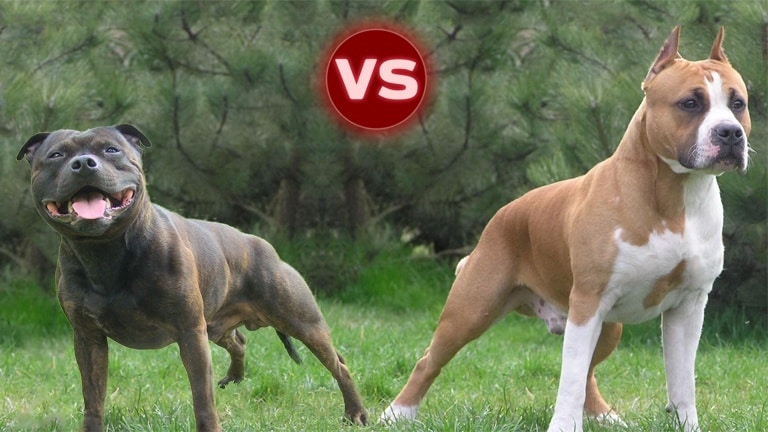
The American Staffordshire Terrier (AmStaff) and the Staffordshire Bull Terrier (Staffie or Stafford) share a name, an ancestry and a lot of their looks. They are still two separate breeds. An adult male AmStaff stands 2 to 5 inches taller than a male Staffie and can weigh nearly twice as much. The two breeds also differ in their inherited diseases and, depending on where you live, in how the law treats them.
One ancestor, two breeds
Both descend from the bull-and-terrier crosses of 19th-century Britain, dogs bred from bulldogs and terriers for baiting and fighting. The Cruelty to Animals Act 1835 outlawed bull and bear baiting, but dog fighting carried on in secret for decades.
In Britain, the Kennel Club (today the Royal Kennel Club) recognized the Staffordshire Bull Terrier in 1935. Across the Atlantic, bull-and-terrier dogs had been arriving since around 1850. The United Kennel Club recognized them as the American Pit Bull Terrier in 1898. In 1936 the American Kennel Club (AKC) accepted some of these dogs under the name Staffordshire Terrier, a nod to the British breed recognized the year before. American breeders had selected a taller, heavier dog than the British type.
The AKC later renamed its breed the American Staffordshire Terrier, to separate it from the British Staffordshire Bull Terrier. The AKC then recognized the Staffordshire Bull Terrier itself in 1974.
Recognition still differs by registry. The AKC registers both breeds. The Royal Kennel Club in the UK does not recognize the AmStaff, and the United Kennel Club registers AmStaffs as American Pit Bull Terriers.
Size and build
| American Staffordshire Terrier | Staffordshire Bull Terrier | |
|---|---|---|
| Height, males | 18 to 19 in (AKC standard) | 14 to 16 in (AKC and Royal Kennel Club) |
| Height, females | 17 to 18 in (AKC standard) | 14 to 16 in |
| Weight, males | 55 to 70 lb (AKC breed profile) | 28 to 38 lb, or 13 to 17 kg |
| Weight, females | 40 to 55 lb (AKC breed profile) | 24 to 34 lb, or 11 to 15.4 kg |
| Head | Medium length, broad skull | Short foreface; the Royal Kennel Club asks for 1 part muzzle to 2 parts skull |
| Ears | Cropped or uncropped, uncropped preferred | Rose or half-pricked; full drop or full prick is a serious fault |
The AmStaff standard, dated June 10, 1936, gives no weight at all. It only asks that height and weight be in proportion, so the weights above come from the AKC’s breed profile. The Staffie standard is stricter: the AKC version treats a dog outside the height and weight limits as faulty, and asks for a body as long from withers to tail as it is tall at the withers.
Color rules differ too. The AmStaff standard accepts any color but discourages all white, more than 80% white, black and tan, and liver. The AKC Staffie standard accepts red, fawn, white, black or blue, any of these with white, and any shade of brindle. It disqualifies black and tan, liver and merle. The current AKC Staffie standard was approved on July 8, 2025 and took effect on September 30, 2025.
Temperament and energy
The AKC rates both breeds from 1 to 5 on a set of traits. These are editorial scores, not test results, but they show where the breeds differ.
| AKC trait | AmStaff | Staffie |
|---|---|---|
| Affectionate with family | 5 | 5 |
| Good with young children | 3 | 5 |
| Good with other dogs | 3 | 3 |
| Energy level | 3 | 5 |
| Trainability | 3 | 5 |
| Watchdog and protective nature | 5 | 3 |
| Adaptability | 3 | 5 |
The Staffie’s reputation with children goes back to its standard. The Royal Kennel Club version describes a dog that is “highly intelligent and affectionate especially with children” and calls the temperament “bold, fearless and totally reliable.”
With other dogs, neither breed is easy. For the AmStaff, the Staffordshire Terrier Club of America and the AKC both say the dog should not be left alone with other dogs, because dog aggression can develop even after good socialization. For the Staffie, the AKC reminds owners that the breed was originally bred to fight other dogs, that most keep a strong prey drive, and that play can escalate, especially after maturity. It also says Staffords are not good candidates for dog parks or for homes with several male dogs. Our AmStaff temperament guide covers the management side.
On exercise, the AKC scores the Staffie higher for energy than the AmStaff. The Royal Kennel Club suggests up to an hour of exercise a day for a Staffie. The AKC advises waiting until about 18 months before a Staffie runs beside a bike or a jogger, and warns that the breed can be heat intolerant. For the AmStaff, the AKC simply says the breed needs a lot of exercise and does best as part of family life.
Health differences
The Orthopedic Foundation for Animals (OFA) publishes a screening list for each breed, agreed with the breed club. A dog that completes it receives a CHIC number.
| Screening | AmStaff | Staffie |
|---|---|---|
| Hips (OFA or PennHIP) | Required | Required |
| Elbows | Optional | Required |
| Eye exam | Optional | Required, from 12 months |
| Heart | Required | Optional |
| Thyroid | Required | Not listed |
| DNA tests | NCL (cerebellar ataxia) | L-2-HGA and hereditary cataracts |
Each breed has its own signature DNA test. AmStaffs are tested for a late-onset form of neuronal ceroid lipofuscinosis (NCL), which causes a slowly worsening loss of coordination, usually first seen between 3 and 5 years. Among 965 AmStaffs with OFA results, 24.8% were carriers. Staffies are tested for L-2-hydroxyglutaric aciduria (L-2-HGA), a metabolic disease that affects the brain, and for hereditary cataracts. Only 1 of 553 Staffies tested for L-2-HGA was a carrier, and 1 of 540 for cataracts.
Joint figures from the OFA database, where owners submit X-rays voluntarily:
- Hips: 25.7% dysplastic among 4,303 AmStaffs, 16.1% among 1,492 Staffies.
- Elbows: 18.3% dysplastic among 1,614 AmStaffs, 21.8% among 941 Staffies.
Both breeds are predisposed to demodicosis, a mite-driven skin disease of young dogs. A US study of more than 1.1 million dogs (Plant et al., 2011) put the AmStaff first among all breeds, with an odds ratio of 35.6, and the Staffie second at 17.1.
For lifespan, the AKC gives 12 to 16 years for the AmStaff and 12 to 15 years for the Staffie. A 2024 UK study of 584,734 dogs (McMillan et al.) calculated 12.5 years for the AmStaff and 12 years for the Staffie. Our AmStaff health guide goes through each condition.
Legal status
This is where the choice can be made for you, so check the rules before you look at puppies.
United Kingdom
The UK government’s list of banned dogs names five types: the Pit Bull Terrier, the Japanese Tosa, the Dogo Argentino, the Fila Brasileiro and the XL Bully. Neither the AmStaff nor the Staffordshire Bull Terrier appears on it. Two points still matter. First, the government says a dog’s status “depends on what it looks like, rather than its breed or name,” and the owner has to prove that a seized dog is not a banned type. Since the AmStaff shares its ancestry and much of its build with the American Pit Bull Terrier, a pedigree alone does not settle the question. Second, the official XL Bully conformation standard starts at 20 inches at the withers for adult males and 19 inches for adult females. Both are above the heights in either breed standard.
Ireland
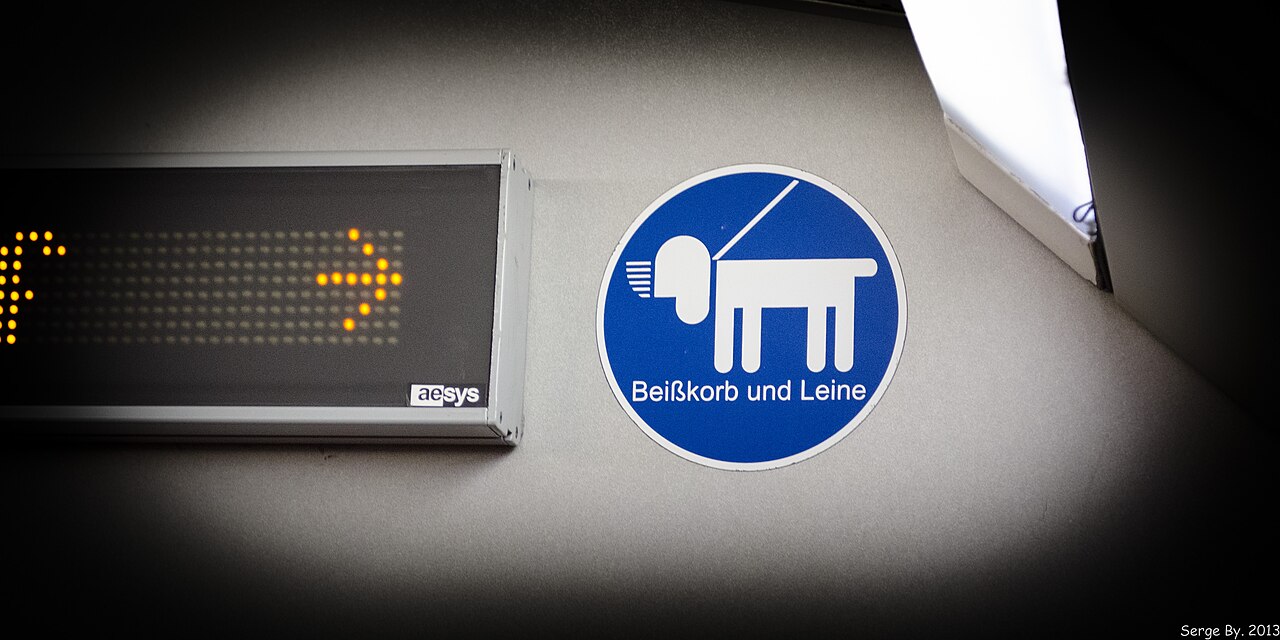
The Control of Dogs Regulations 1998 name the Staffordshire Bull Terrier among the breeds that must be muzzled in public and led on a strong lead or chain no longer than 2 meters, by a person over 16 who can control the dog. The AmStaff is not named in that list, but the rule also covers strains and crosses of the listed breeds, which include the American Pit Bull Terrier.
France
The situation is reversed. According to the government site service-public.fr, a pedigreed AmStaff is a category 2 dog (guard and defense dog), and a dog without a pedigree that resembles an AmStaff falls into category 1 (attack dog), the group commonly called pit bulls. Owners of both categories need a detention permit and a behavioral assessment of the dog, and face rules on access to public places. The Staffordshire Bull Terrier is in neither category.
United States
There is no federal breed law. Some cities and counties restrict “pit bull” type dogs, and their definitions often cover both AmStaffs and Staffies. Our article on AmStaffs and breed-specific legislation explains how to check the rules where you live.
Which one fits your home
If you want the smaller dog, the Staffie standard caps males at 38 pounds, while a male AmStaff can reach 70. If you have young children, the AKC scores the Staffie higher. If you already have another dog, both breeds call for supervision. In every case, ask the breeder for the parents’ OFA results: hips, heart, thyroid and the NCL DNA test for an AmStaff; hips, elbows, eyes, L-2-HGA and hereditary cataracts for a Staffie. Then check your local law and your landlord’s or insurer’s conditions before you commit. Our guide is an AmStaff right for you? lists the other points to weigh.