Is an AmStaff right for you? What to weigh before you commit
The AKC describes the American Staffordshire Terrier as “smart, confident, good-natured,” and the breed rates at the top of its scale for affection with family. It is also a strong, energetic terrier with a known tendency toward dog aggression, restricted by law in some places and by insurers and landlords in others. Whether an AmStaff fits your life depends less on how much you like the breed and more on a few practical questions.
Size and strength
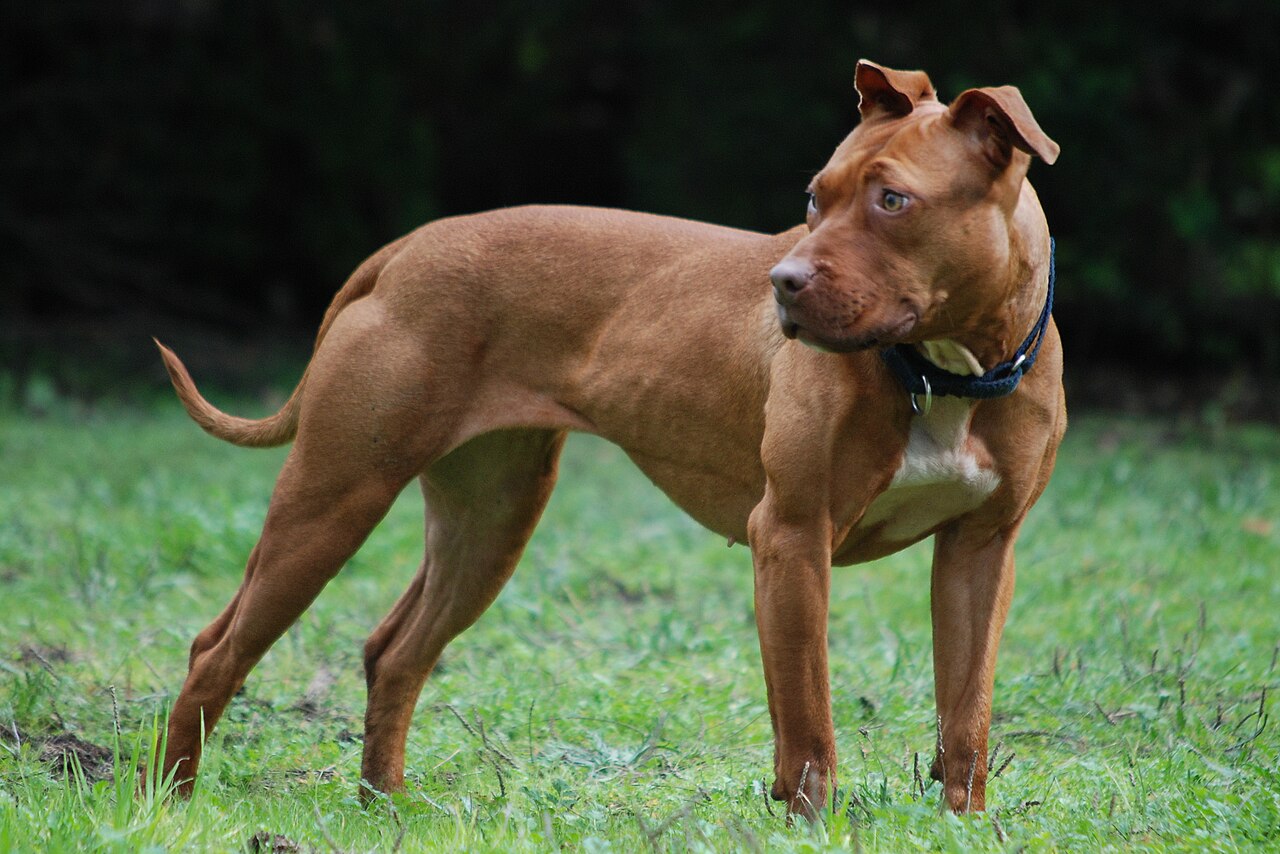
The AKC standard prefers 18 to 19 inches at the shoulder for males and 17 to 18 inches for females. The AKC breed page gives 55 to 70 lb for males and 40 to 55 lb for females. The standard calls for “great strength for his size”: a stocky, muscular dog, not a lanky one.
That strength matters every day. An adult AmStaff that lunges on the leash is hard to hold for anyone who is not braced for it. Ask yourself honestly whether everyone who will walk the dog can hold it, including teenagers and older family members, and plan to train loose-leash walking from the start. Our guide to training an AmStaff puppy covers the first steps.
Exercise and mental work
The AKC says the breed “requires a lot of exercise” and adds that leaving the dog in the yard all day is not the answer: the AmStaff is people-oriented and does best when it is part of family life. Long play sessions with its owner, walks, and dog sports such as obedience, agility and dock diving all fit the breed. The breed club lists agility, conformation, carting, packing, therapy work and search and rescue among the activities AmStaffs do well.
No official source gives a set number of hours per day, and needs vary with age and individual dog. A practical test: if you cannot see yourself giving a dog daily walks plus play and short training sessions, in all weather, for 12 years or more, this is probably not your breed. A 2024 UK study put the breed’s life expectancy at 12.5 years, and the AKC lists 12 to 16 years.
Space and home
Daily exercise matters more than floor space, but you will need safe places to let the dog move. A yard helps only if the fencing is secure and the dog cannot slip out when a gate is left open. The coat is short and easy: the AKC suggests a weekly brush with a soft bristle brush.
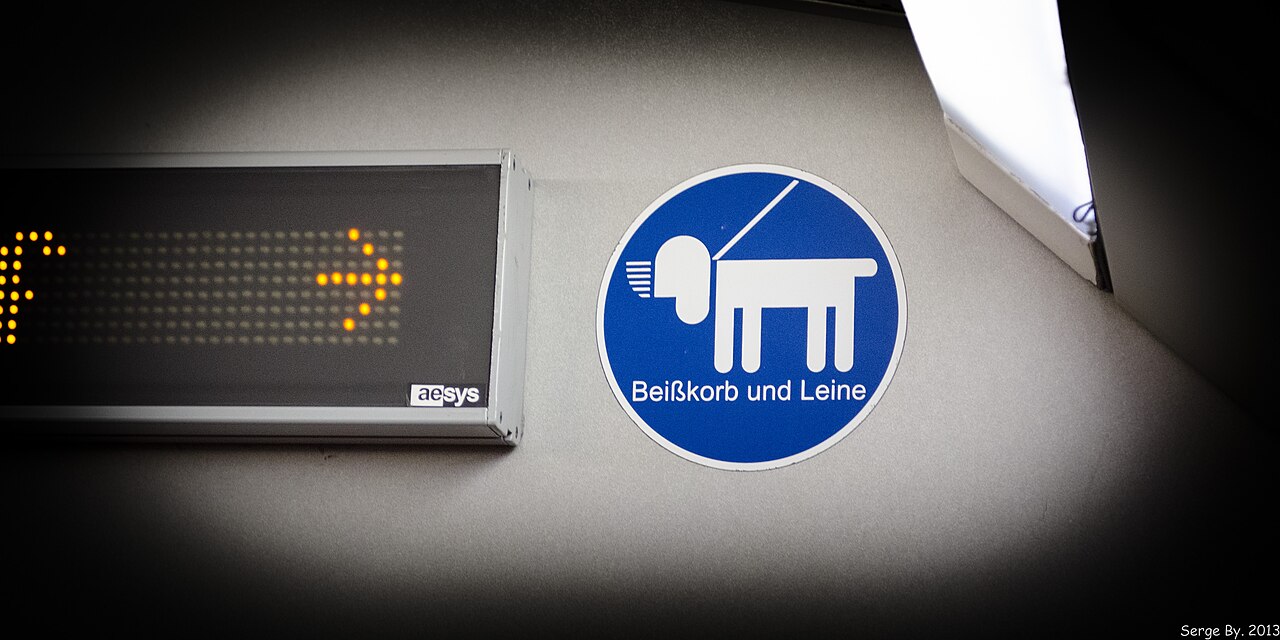
Check where you live now and where you might live later. Some cities and countries restrict the breed or require permits, muzzles or insurance. Our article on where the AmStaff is restricted summarizes the main laws.
Children and other pets
The breed club describes AmStaffs as very good with children, and adds a rule that applies to every breed: children and dogs should never be left alone together. The AKC’s breed profile adds that dogs should always be supervised around young children.
Other dogs are the bigger question. Both the AKC and the Staffordshire Terrier Club of America warn that dog aggression can develop even in well-socialized AmStaffs and that an AmStaff should not be left alone with other dogs. If you already have a dog, or want two, plan for supervision, separate spaces when you are out, and careful introductions. On the AKC’s scale, the breed is rated “with supervision” for other dogs as well as for young children.
Neither the AKC nor the breed club gives specific guidance on cats and small animals, and individual dogs differ. If you have small pets, meet the adult dog (or the puppy’s parents) first and supervise any introduction closely.
Time alone
AmStaffs are people-oriented. A dog left alone for long workdays without exercise or company is likely to find its own entertainment, and the AKC notes that chewing and digging can be hard to resolve in this breed. If you work full days away from home, budget for a dog walker or daycare, and teach the puppy early to be calm alone for short periods.
Insurance and rental restrictions
In the United States, some home and renter insurers limit coverage for breeds they consider higher risk, and pit bull type dogs are among the breeds most often excluded. Restrictions can include refusing to cover dog bites, charging more, refusing the policy, or requiring conditions such as muzzles, secure enclosures or passing the AKC Canine Good Citizen test. The AmStaff breed club itself advises owners to check homeowners and rental insurance rules and breed restrictions.
Many landlords, condominium boards and homeowners’ associations have breed lists, often tied to their insurance. Before you get the dog:
- ask your insurer in writing whether your policy covers an American Staffordshire Terrier;
- read your lease or building rules for breed or weight limits;
- check any travel plans: some airlines and some countries restrict pit bull type dogs.
Outside the US, check local rules. In France, for example, owning a registered AmStaff requires civil liability insurance by law.
Budget
Costs vary too much by country and region to give reliable figures, so price each item locally before you commit:
- purchase or adoption fee;
- vaccinations, microchip, deworming and parasite prevention;
- spaying or neutering, if you choose it or local rules require it;
- good-quality food (the AKC advises watching calories and weight, since some dogs put on weight easily);
- a sturdy crate, harness, leash, chew toys and, where needed, a well-fitted muzzle;
- puppy and obedience classes;
- liability insurance and pet health insurance;
- permits or licenses, and any mandatory training course where the breed is regulated;
- dog walker, daycare or boarding;
- vet care for conditions seen in the breed, such as allergic skin disease, which our health guide describes.
Where to get an AmStaff
Breeders
The Staffordshire Terrier Club of America (STCA) publishes a breeder listing of member breeders by state, while stating that it does not endorse the kennels listed. The club recommends that breeders test breeding dogs for:
- hip dysplasia (OFA or PennHIP);
- congenital heart disease (cardiac exam by a cardiologist);
- autoimmune thyroiditis;
- NCL-A, or cerebellar ataxia (DNA test, results registered with the OFA);
- ALPP, AmStaff juvenile laryngeal paralysis and polyneuropathy (DNA test).
Ask to see the results for both parents, and check them on the OFA database. A breeder who cannot show them, sells without registration papers, or has puppies always available is a reason to walk away. Registration papers matter legally in some countries, as our comparison of the AmStaff and the pit bull explains.
Rescue
The STCA runs a rescue committee organized in 10 zones across the United States. Shelters also take in many pit bull type dogs; some are AmStaffs or AmStaff mixes, and an adult dog has the advantage that its adult temperament, including how it behaves with other dogs, is already visible. Ask the shelter how the dog has reacted to other dogs, cats and children, and whether it has been tested with them.
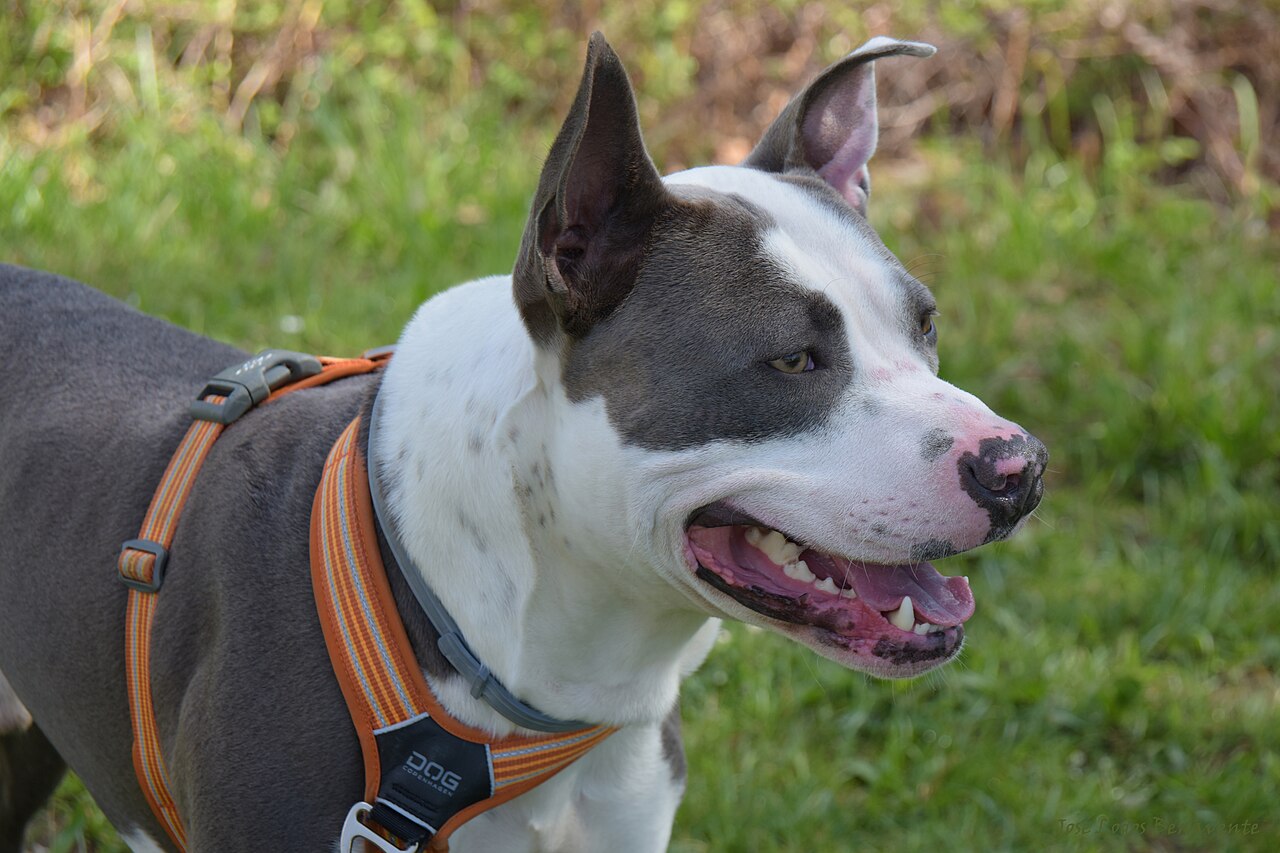
Photo: Joselodos, Wikimedia Commons, CC0.